Which line creates an empty dictionary?, {}, dict(), Both A and B, [], Which data type is immutable?, List, Set, Dictionary, Tuple, Which symbol is used for comments?, //, #, %, /*, Which keyword is used to handle exceptions?, Catch, Except, Error, Throw, Which module generates random numbers?, math, random, os, sys, Which keyword skips the current iteration?, break, stop, continue, pass, What is the output? print(10%3), 3, 1, 0, 10, Which keyword creates an anonymous function?, lambda, func, anonymous, define, What is the output? print("5" + "5"), 10, 55, error, 25, Which function removes all items from a list?, remove(), delete(), clear(), pop(), Which statement is true?, Tuples are mutable., Lists are immutable., Strings are immutable., Sets allow duplicate values., Which keyword is used to create a generator?, generate, return, yield, next, Which function checks the memory address of an object?, id(), type(), mem(), object(), Which data type is unordered?, list, tuple, string, set, What is the output? print("10" * 3), 30, error, 101010, 1000, Which keyword is used to skip writing code inside a function?, skip, continue, break, pass, Which method removes the last item in a list?, remove(), pop(), clear(), delete, Which operator has the highest precedence?, +, **, *, //, What will this print? print(any([0, "", False, 5])), True, False, error, none, Which built-in function returns both the index and value while looping?, range(), enumerate(), zip(), map(), What is the output? print([i*i for i in range(5) if i % 2 == 0]), [0, 1, 4, 9, 16], [0, 4, 16], [1,9], error, Which function is lazy evaluated?, list(), tuple(), dict(), range(), What is the output? x = [[1]*3]*3x[0][0] = 9print(x), [[9,1,1],[1,1,1],[1,1,1]], [[9,1,1],[9,1,1],[9,1,1]], error, [[1,1,1],[1,1,1],[1,1,1]], What is the output? print(bool("False")), False, True, error, none, What is the output? print({1,2,3} & {2,3,4}), {1,2,3,4}, {2,3}, {1,4}, none, Which statement is true?, Dictionary keys must be mutable., Dictionary values must be unique., Lists can be dictionary keys., Dictionary keys must be immutable., What is the output? def f(a=[]): a.append(1) return aprint(f())print(f()), [1][1], [1][1, 1], [][], error, Which principle allows the same method to behave differently based on the object?, Inheritance, Polymorphism, Encapsulation, Abstraction, What is the purpose of the pass statement?, Skip the current loop iteration, Exit the program, Act as a placeholder where code will be added later, Ignore exceptions, What is the main advantage of using generators?, Reduced memory usage by generating values on demand, Faster printing, Easier debugging, Automatic sorting, Which of the following objects is hashable?, set, list, dictionary, tuple, Which of the following creates a shallow copy?, copy.deepcopy, list[:], json.loads, pickle.load, What is the biggest advantage of Python's dynamic typing?, Faster execution, Lower memory usage, Flexibility in assigning different data types, Better security, Which feature is mainly responsible for Python's memory efficiency while iterating over large datasets?, Threads, lists, generates, classes, Which principle is violated if all class variables are declared as public?, inheritance, polymorphism, encapsulation, abstraction, Which of the following is NOT a valid reason to use a tuple instead of a list?, Faster iteration, Easy insertion of new elements, Immutable data, Can be dictionary keys, Which statement about decorators is TRUE?, Decorators can modify the behavior of functions without changing their source code., Decorators permanently rewrite the function., Decorators work only with classes, Decorators are used only for recursion., Which module is most appropriate for measuring the execution time of a Python program?, random, os, time, math, Which statement about list comprehensions is correct?, They always consume less memory than generators, They create the entire list in memory immediately, They cannot contain conditions, They are slower than loops in every case., Which of the following best explains duck typing in Python?, Objects are identified by their data type only., An object's suitability depends on the methods it supports, not its type, Python converts every object into a string, Only built-in classes support polymorphism.
0%
Python questions
Compartir
Compartir
per en/la
Arunadev7677
Editar continguts
Guarda
M'agrada
Imprimir
Incrustar
Més
Assignacions
Tauler de classificació
Mostrar-ne més
Mostrar-ne menys
Aquesta taula de classificació és privada actualment. Fés clic a
Compartir
per fer-la públic.
El propietari del recurs ha inhabilitat aquesta taula de classificació.
Aquesta taula de classificació està inhabilitada perquè que les teves opcions són diferents a les del propietari del recurs.
Reverteix les opcions
Qüestionari
és una plantilla de final obert. No genera puntuacions per a una taula de classificació.
Cal iniciar la sessió
Estil visual
Tipus de lletra
Subscripció obligatòria
Opcions
Més aviat així
Python Quiz - Concepts revisited
per en/la
Shinuarora28
Qüestionari
6
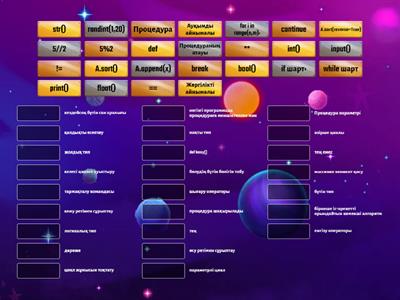
Python программалау тілі
per en/la
Guzikmik
Emparellar
8
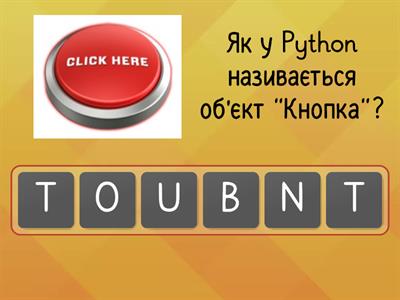
Об'єкти мови програмування Python, 8 клас
per en/la
Annatselujko
Anagrama
42
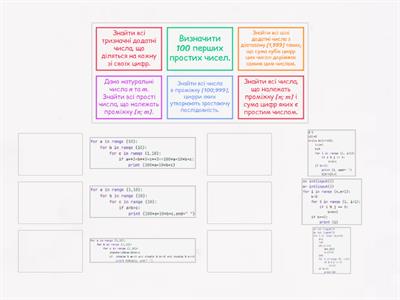
Python. Цикл For (Класичні задачі)
per en/la
Bobkovachernenko
Emparellar
14
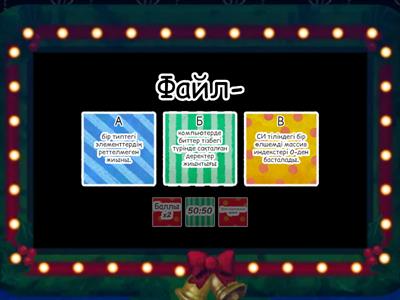
Python Программалау тілі
per en/la
Kuralaydd93
Qüestionari de concurs
5
Python программалау 6-сынып
per en/la
Ergazykemelov
Avió
5
Повторення Python
per en/la
U36144624
Troba la parella
10
Python поточні вправи
per en/la
Yuriy22
Qüestionari
8
Canvia de fonament
Mostrar-ho tot
Resultats oberts
Copiar enllaç
Codi QR
Suprimir
Restaurar desada automàtica:
?