Extreme Long Shot/Establishing shot, A building, landscape, or crowd of people will fill the screen. Usually the first or last shots of a sequence., Long Shot (LS), A human figure fills the whole screen – often used for shots where body action is shown, ie. fight scenes, musicals etc., Medium Long Shot (MLS), With this shot, you can still see expression on the person’s face, while getting more information from what is going on around the person., Medium Close Up (MCU), This shot shows your subject from the chest to above the head. Often used when the subject is doing something the audience needs to see., Close Up (CU), If you are shooting just the head and shoulders of a subject this is a close up. Often used to show a character’s emotions., Extreme Close Up (ECU), Used to reveal very small details. It might be used to reveal horror in a subject (extreme close up of the subject's mouth as she/he screams)., Two Shot, When two people are in the scene and their interaction is important. A two-shot is a good way to introduce a conversation., Over-the-shoulder shot, A shot taken from the perspective or camera angle from the shoulder of another person., High Angle Shot, The camera is placed above the subject and tilted to look down. You can use it to create a sense of smallness in the subject., Low Angle Shot, The camera is placed on the ground or floor and tilted to look up. A low angle shot can be used to make a subject look bigger than it is., High and Low Angle Shots, These shots can be used in combination to show an unequal power relationship, Dutch angle/Dutch tilt, The camera is tilted so that the shot is composed with vertical lines at an angle to the side of the frame. The purpose is often to unsettle., Tilt, The camera moves up and down, Pan, The camera moves between left and right, Dolly/Tracking shot, A long, continuous shot that requires the camera to move physically with an object/character. The camera moves backwards, forwards, or sideways along a track (also known as a dolly)., Zoom, The camera pulls in or out to reveal information. (ie. ‘Zooms in’ gets closer to an object, ‘Zooms out’ gets further away from an object.)
0%
Camera Techniques
Sdílet
Sdílet
podle
Davisa8
Upravit obsah
Uložit
Jako
Tisk
Vložit
Více
Přiřazení
Výsledková tabule/Žebříček
Zobrazit více
Zobrazit méně
Tento žebříček je v současné době soukromý. Klikněte na
Share
chcete-li jej zveřejnit.
Tuto výsledkovou tabuli vypnul majitel zdroje.
Tento žebříček je zakázán, protože vaše možnosti jsou jiné než možnosti vlastníka zdroje.
Možnosti vrácení
Spojte odpovídající
je otevřená šablona. Negeneruje skóre pro žebříček.
Vyžaduje se přihlášení.
Vizuální styl
Fonty
Je vyžadováno předplatné
Možnosti
Spíš takhle
Match up- Camera shots and angles
podle Anonymní
Spojte odpovídající
3
Cinema vocabulary
podle
Englishwithayi
Označený diagram
17
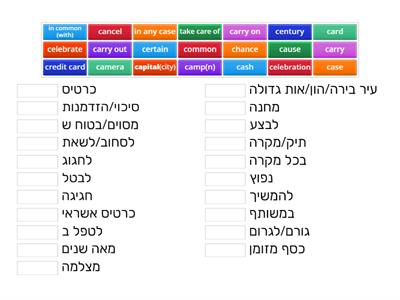
Band 2-Page 1: camera-chance
podle
Irisroz68
Spojte odpovídající
6
Camera Shots and Film Techniques
podle
Madamegetschel
Najít shodu
3
Cinema vocabulary
podle
Legends
Kvíz
5
CINEMATIC TECHNIQUES: Camera Shots and Angles
podle
U33097628
Spojte odpovídající
3
Film Techniques
podle
Hayley86
Třídění skupin
4
Camera Angles
podle
Soozywilmott
Spojte odpovídající
3
Přepnout šablonu
Zobrazit vše
Otevřené výsledky
Kopírovat odkaz
QR kód
Odstranit
Obnovit automatické uložení:
?