Extreme Long Shot/Establishing shot, A building, landscape, or crowd of people will fill the screen. Usually the first or last shots of a sequence., Long Shot (LS), A human figure fills the whole screen – often used for shots where body action is shown, ie. fight scenes, musicals etc., Medium Long Shot (MLS), With this shot, you can still see expression on the person’s face, while getting more information from what is going on around the person., Medium Close Up (MCU), This shot shows your subject from the chest to above the head. Often used when the subject is doing something the audience needs to see., Close Up (CU), If you are shooting just the head and shoulders of a subject this is a close up. Often used to show a character’s emotions., Extreme Close Up (ECU), Used to reveal very small details. It might be used to reveal horror in a subject (extreme close up of the subject's mouth as she/he screams)., Two Shot, When two people are in the scene and their interaction is important. A two-shot is a good way to introduce a conversation., Over-the-shoulder shot, A shot taken from the perspective or camera angle from the shoulder of another person., High Angle Shot, The camera is placed above the subject and tilted to look down. You can use it to create a sense of smallness in the subject., Low Angle Shot, The camera is placed on the ground or floor and tilted to look up. A low angle shot can be used to make a subject look bigger than it is., High and Low Angle Shots, These shots can be used in combination to show an unequal power relationship, Dutch angle/Dutch tilt, The camera is tilted so that the shot is composed with vertical lines at an angle to the side of the frame. The purpose is often to unsettle., Tilt, The camera moves up and down, Pan, The camera moves between left and right, Dolly/Tracking shot, A long, continuous shot that requires the camera to move physically with an object/character. The camera moves backwards, forwards, or sideways along a track (also known as a dolly)., Zoom, The camera pulls in or out to reveal information. (ie. ‘Zooms in’ gets closer to an object, ‘Zooms out’ gets further away from an object.)
0%
Camera Techniques
Teilen
Teilen
von
Davisa8
Inhalt bearbeiten
Speichern
Gefällt mir
Drucken
Einbetten
Mehr
Zuweisungen
Bestenliste
Mehr anzeigen
Weniger anzeigen
Diese Bestenliste ist derzeit privat. Klicke auf
Teilen
um sie öffentlich zu machen.
Diese Bestenliste wurde vom Eigentümer der Ressource deaktiviert.
Diese Bestenliste ist deaktiviert, da sich Ihre Einstellungen von denen des Eigentümer der Ressource unterscheiden.
Einstellungen zurücksetzen
It's a Match
ist eine Vorlage mit offenem Ende. Es generiert keine Punkte für eine Bestenliste.
Anmelden erforderlich
Visueller Stil
Schriftarten
Abonnement erforderlich
Einstellungen
Eher so
Match up- Camera shots and angles
von Anonym
It's a Match
3
Cinema vocabulary
von
Englishwithayi
Beschriftetes Diagramm
17
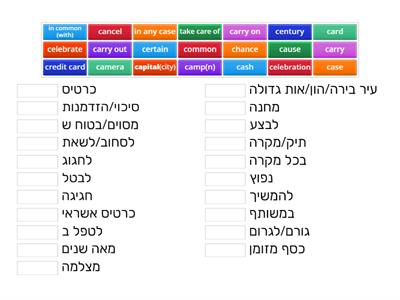
Band 2-Page 1: camera-chance
von
Irisroz68
It's a Match
6
Camera Shots and Film Techniques
von
Madamegetschel
Die passende Antwort
3
Cinema vocabulary
von
Legends
Quiz
5
CINEMATIC TECHNIQUES: Camera Shots and Angles
von
U33097628
It's a Match
3
Film Techniques
von
Hayley86
Die richtige Gruppe
4
Camera Angles
von
Soozywilmott
It's a Match
3
Vorlage ändern
Alle anzeigen
Offene Ergebnisse
Link kopieren
QR-Code
Löschen
Soll die automatisch gespeicherte Aktivität
wiederhergestellt werden?