Extreme Long Shot/Establishing shot, A building, landscape, or crowd of people will fill the screen. Usually the first or last shots of a sequence., Long Shot (LS), A human figure fills the whole screen – often used for shots where body action is shown, ie. fight scenes, musicals etc., Medium Long Shot (MLS), With this shot, you can still see expression on the person’s face, while getting more information from what is going on around the person., Medium Close Up (MCU), This shot shows your subject from the chest to above the head. Often used when the subject is doing something the audience needs to see., Close Up (CU), If you are shooting just the head and shoulders of a subject this is a close up. Often used to show a character’s emotions., Extreme Close Up (ECU), Used to reveal very small details. It might be used to reveal horror in a subject (extreme close up of the subject's mouth as she/he screams)., Two Shot, When two people are in the scene and their interaction is important. A two-shot is a good way to introduce a conversation., Over-the-shoulder shot, A shot taken from the perspective or camera angle from the shoulder of another person., High Angle Shot, The camera is placed above the subject and tilted to look down. You can use it to create a sense of smallness in the subject., Low Angle Shot, The camera is placed on the ground or floor and tilted to look up. A low angle shot can be used to make a subject look bigger than it is., High and Low Angle Shots, These shots can be used in combination to show an unequal power relationship, Dutch angle/Dutch tilt, The camera is tilted so that the shot is composed with vertical lines at an angle to the side of the frame. The purpose is often to unsettle., Tilt, The camera moves up and down, Pan, The camera moves between left and right, Dolly/Tracking shot, A long, continuous shot that requires the camera to move physically with an object/character. The camera moves backwards, forwards, or sideways along a track (also known as a dolly)., Zoom, The camera pulls in or out to reveal information. (ie. ‘Zooms in’ gets closer to an object, ‘Zooms out’ gets further away from an object.)
0%
Camera Techniques
Compartir
Compartir
por
Davisa8
Editar contenido...
Salvar
Me gusta
Imprimir
Incrustar
Más
Tareas
Tabla de clasificación
Mostrar más
Mostrar menos
Esta tabla de clasificación es actualmente privada. Haz clic en
Compartir
para hacerla pública.
Esta tabla de clasificación ha sido desactivada por el propietario del recurso.
Esta tabla clasificación está desactivada, ya que sus opciones son diferentes a las del propietario del recurso.
Revertir opciones
Une las parejas
es una plantilla abierta. No genera puntuaciones para una tabla de clasificación.
Requiere iniciar sesión
Estilo visual
Fuentes
Se necesita una suscripción
Opciones
Más bien así
Match up- Camera shots and angles
por Anónimo
Une las parejas
3
Cinema vocabulary
por
Englishwithayi
Diagrama con etiquetas
17
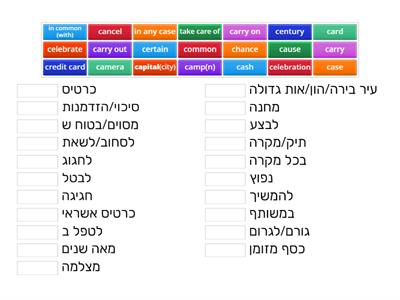
Band 2-Page 1: camera-chance
por
Irisroz68
Une las parejas
6
Camera Shots and Film Techniques
por
Madamegetschel
Cada oveja con su pareja
3
Cinema vocabulary
por
Legends
Cuestionario
5
CINEMATIC TECHNIQUES: Camera Shots and Angles
por
U33097628
Une las parejas
3
Film Techniques
por
Hayley86
Ordenar por grupo
4
Camera Angles
por
Soozywilmott
Une las parejas
3
Cambiar plantilla
Mostrar todo
Resultados abiertos
Copiar enlace
Código QR
Eliminar
¿Restaurar actividad almacenada automáticamente:
?