Algorithm, A clear set of steps to solve a problem., Instruction, A single command (one step) in an algorithm., Program, A sequence of instructions that runs to complete a task., Automation, Getting a process done by a program instead of a person doing every step., Decomposition, Breaking a big problem into smaller manageable parts., Pattern, A repeated structure you can spot and reuse in a solution., Loop, Repeating the same instructions., Conditional, A decision point: do something only if a condition is true., If / else, “If this is true, do this; otherwise do that.”, Branching, The program taking different paths depending on conditions., Variable, A named value that can change., Counter, A variable used to keep track of a number (like how many times something happens)., Input, Data that goes into a program., Output, The result a program produces., Bug, A mistake that causes a program to behave incorrectly., Debugging, Finding and fixing bugs., Flowchart, A diagram that shows the steps of an algorithm using standard symbols., Pseudocode, A “halfway” language: structured like code, but written in plain English., Trace table, A table used to track how variables change step-by-step as an algorithm runs.
0%
Algorithms - keywords
공유
공유
만든이
Entrepreneurquizzes
Secondary
KS3
Computing
콘텐츠 편집
저장
좋아요
인쇄
퍼가기
더보기
할당
순위표
더 보기
접기
이 순위표는 현재 비공개입니다.
공유
를 클릭하여 공개할 수 있습니다.
자료 소유자가 이 순위표를 비활성화했습니다.
옵션이 자료 소유자와 다르기 때문에 이 순위표가 비활성화됩니다.
옵션 되돌리기
애너그램
(은)는 개방형 템플릿입니다. 순위표에 올라가는 점수를 산출하지 않습니다.
로그인이 필요합니다
비주얼 스타일
글꼴
구독 필요
옵션
이런 식으로 더 많아
Algebra terminology keywords
만든이
Msearson
워드서치
2
Programming Terminology Task
만든이
Catwilkes
매치업
3
Algorithms
만든이
Zehranaqvi
퀴즈
9
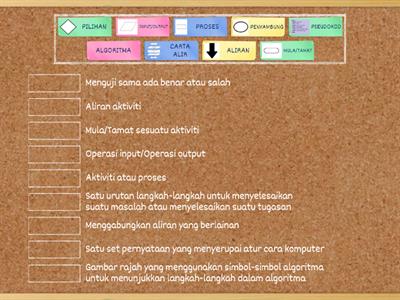
MENGENAL ALGORITMA, PSEUDOKOD DAN CARTA ALIR
만든이
Lokalnamkin
비행기
4
UNIT 2: ALGORITMA, PSEUDOKOD DAN CARTA ALIR
만든이
Norhalizabasiro
매치업
6
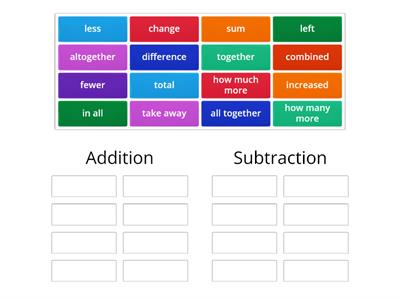
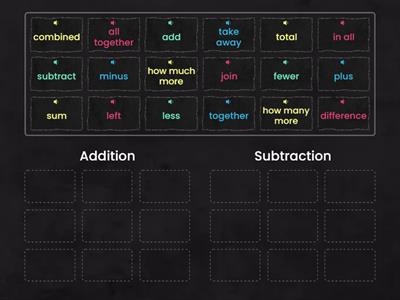
Word Problems keywords
만든이
Angelinacave
그룹 정렬
30
Programming Keywords
만든이
Staylor107
매치업
6
Word Problem Keywords
만든이
Rcrull
그룹 정렬
234
템플릿 전환하기
모두 표시
결과 열기
링크 복사
QR 코드
삭제
자동 저장된
게임을 복구할까요?