when did it emerge, 1920s, 1950s-60s, 1970s, 1930s, 1980s, 1940s, when did it become used in the context of therapy, 1920s, 1950s-60s, 1970s, 1930s, 1980s, 1940s, when did it become a unique form of therapy, 1920s, 1950s-60s, 1970s, 1930s, 1980s, 1940s, basic assumptions, if problematic behaviour is taught, good behaviour can be taught too, focused on understanding where the bad behaviour came from, educational, tailored to the individual, empirically based treatment, mutual contracts or agreements, therapeutic goals, Change problematic behaviours, Connect with the individual, Help the individual process trauma, Set realistic goals, Goals are objective, concreate, and measurable, Therapist's role:, Follow ABC, Conceptualized problems behaviourally, Specific and systematic focus, Avoid use of role modelling, Have a plan and structure, Look at if there is an access or deficit in behaviour, Client's role, Only need to do work while in session, Action, Formulate goals, Experiment to see how different things work, Continue to change and adapt, Therapeutic relationship, Necessary, Neutral, Always positive, Sufficient on its own, Collaborative partnership, behaviour techniques: using various tools to invoke a sense of calm, relaxation training, systematic desenitization, modelling, assertion training, contingency management, behaviour techniques: Make a hierarchy of stimuli, bring into state of calm, then expose to the first step of the hierarchy until anxiety starts until anxiety gets back, then stops and goes back into relaxation, eventually when that part gets less scary, move to the next step on the hierarchy, relaxation training, systematic desenitization, modelling, assertion training, contingency management, behaviour techniques: wolpe, relaxation training, systematic desenitization, modelling, assertion training, contingency management, behaviour techniques: client watches another person preform the desired behaviour, relaxation training, systematic desenitization, modelling, assertion training, contingency management, behaviour techniques: Bandura, relaxation training, systematic desenitization, modelling, assertion training, contingency management, behaviour techniques: Specific way of teaching social communication skills, relevant for passive or aggressive in social dynamics, relaxation training, systematic desenitization, modelling, assertion training, contingency management, behaviour techniques: the use of tangible rewards to reinforce a desired behaviour, relaxation training, systematic desenitization, modelling, assertion training, contingency management, behaviour techniques: skinner, relaxation training, systematic desenitization, modelling, assertion training, contingency management, behaviour techniques: ex: token economy, relaxation training, systematic desenitization, modelling, assertion training, contingency management, is modelling enough on its own, yes, no, exposure and flooding therapies: Client imagines vivid scenes as described by the therapist, Cannot stop the imagining, Stay longer in the scene for the parts that are the most scary and do not leave until it is partially reduced, trust in the therapist is important, Stampfl's implosive therapy, Foa's exposure therapy, Eye Movement Desensitization & Reprocessing (EMDR), exposure and flooding therapies: Focus on military samples and other traumatic accidents, Stampfl's implosive therapy, Foa's exposure therapy, Eye Movement Desensitization & Reprocessing (EMDR), exposure and flooding therapies: Prolonged exposure (flooding), Engaging in response prevention- preventing all the things the person does to avoid the feared stimulus, Response prevention- not letting the person avoid the feared action, Help them realize nothing bad happened because of the feared stimulus, It is done through imagination, may not make it easily replicable, Stampfl's implosive therapy, Foa's exposure therapy, Eye Movement Desensitization & Reprocessing (EMDR), exposure and flooding therapies: can be done through prolonged or gradual exposure, Stampfl's implosive therapy, Foa's exposure therapy, Eye Movement Desensitization & Reprocessing (EMDR), exposure and flooding therapies: Gradual exposure, Work through an anxiety hierarchy, Useful for treating phobias, Requires trust from the clients that you will not let anything bad happen to them, Stampfl's implosive therapy, Foa's exposure therapy, Eye Movement Desensitization & Reprocessing (EMDR), exposure and flooding therapies: Theory that trauma memories are stuck because they are not fully processed, so by doing bilateral brain stimulation while being exposed it facilitates processing, Have a person imagine the negative experience they had and pair the experience with a positive thought- counter conditioning the negative experience with something more positive to make it less intense, client's do not have to talk about the trauma, can be done with fingers or light bar, Stampfl's implosive therapy, Foa's exposure therapy, Eye Movement Desensitization & Reprocessing (EMDR), Who came up with EMDR, Shapiro, "your mom"- Freud, Bandura, Skinner, Wolpe, Application and effectiveness of behaviour therapy, Does not use specific techniques, Combination with medication may be better for some problems, Better than no treatment, Better than placebo, Not as good as insight therapies, Criticisms of behavioural therapy, Too much focus on emotions, Too much focus on interpersonal factors, Does not provide insight, Treats symptoms rather than causes, Therapists uses control and manipulation
0%
systems- behaviour
Kongsikan
Kongsikan
oleh
U27479408
Edit Kandungan
Simpan
Sukai
Cetakan
Benamkan
Lebih lagi
Tugasan
Papan mata
Paparkan banyak
Paparkan sedikit
Papan mata ini berciri peribadi pada masa ini. Klik
Kongsikan
untuk menjadikannya umum.
Papan mata ini telah dilumpuhkan oleh pemilik sumber.
Papan mata ini dinyahdayakan kerana pilihan anda berbeza daripada pemilik sumber.
Pilihan untuk Kembali
Kuiz
ialah templat terbuka. Ia tidak menjana skor untuk papan mata.
Log masuk diperlukan
Gaya visual
Fon
Langganan diperlukan
Pilihan
Lebih tepat seperti ini
Talking about Behaviour
oleh
Rosanamsd
Roda rawak
10
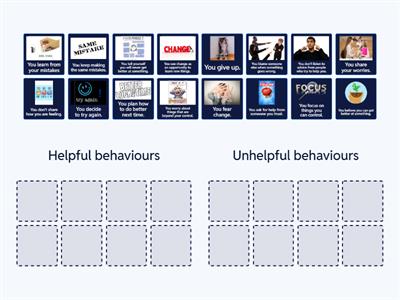
1.3 Give an example of how resilience can be developed (Helpful and unhelpful behaviours)
oleh
Ahead
Susunan kumpulan
33
Positive and negative behaviours
oleh
Waynepalmer
Susunan kumpulan
12
Size of the problem- social skills
oleh
Matthiak
Kad rawak
235
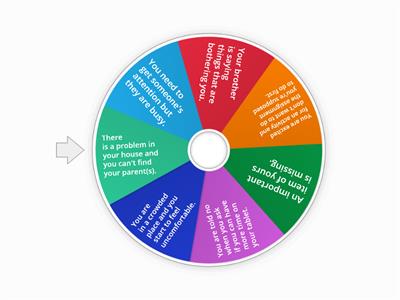
Scenarios - how can you show self-control in responding?
oleh
Morgandean
Roda rawak
7
Good or Bad Behaviour?
oleh
Julianvella
Susunan kumpulan
3
Personality and Behaviour
oleh
Hyrumochoa33
Lengkapkan ayat
3
Public vs. Private Behaviour
oleh
Arielvallebai
Kuiz
8
Tukar templat
Paparkan semua
Buka keputusan
Salin pautan
Kod QR
Padam
Pulihkan autosimpan:
?