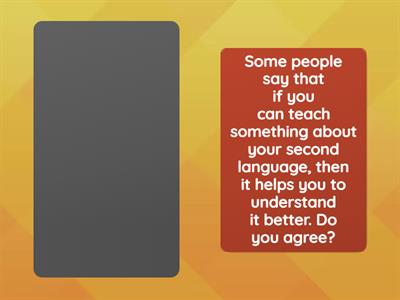
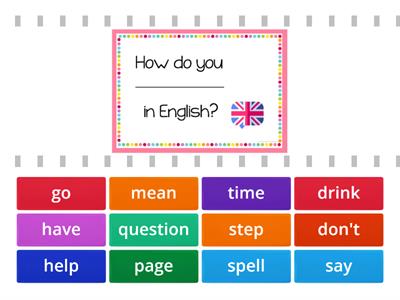
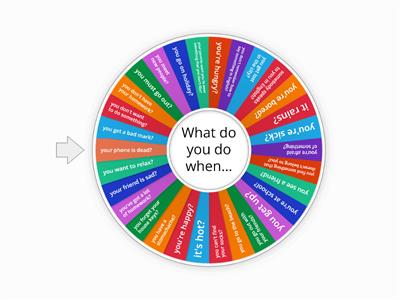
Younger learners, usually have much more exposure to the language, may listen for a long time before speaking, often experiment without worrying about accuracy, learn through interaction, games and everyday situations, Older learners, have stronger cognitive and problem-solving abilities, have greater metalinguistic awareness, can consciously analyse grammar and language patterns, often have much less exposure to the L2, may feel more anxious about making mistakes
0%
Language learning
共用
共用
由
Uterletska
編輯內容
存檔
喜歡
列印
嵌入
更多
需要登錄
視覺風格
顯示所有
字體
活動設定
排行榜
作業
需要訂閱
活動設定
排行榜
此排行榜當前是私有的。單擊
共用
使其公開。
資源擁有者已禁用此排行榜。
此排行榜被禁用,因為您的選項與資源擁有者不同。
還原選項
顯示更多
顯示更少
按組排序
是一個開放式範本。它不會為排行榜生成分數。
作業
您尚未與學生分享任何活動
要開始收集結果,請轉到任何活動頁面,然後選擇
Set assignment(設置分配
)。
確認您的設置並與學生共用生成的連結。
課業分配
更像這樣
Let`s talk about language learning
由
Elisajensen88
隨機輪盤
4
Learning a language conversation questions
由
Callumfitz
隨機卡
9
Test for Young Learners
由
Liliia380674400489
測驗
38
Language Learning Discussion
由
Nijomakh
隨機輪盤
4
Classroom language practice
由
Carla1487cf
查找匹配項
7
What do you do when...? young learners PART 1
由
Magdalenazielin1
隨機輪盤
44
What do you do when...? Young Learners PART 2
由
Magdalenazielin1
隨機輪盤
4
Language Learning Discussion Questions
由
Puzyrevasn
隨機卡
8
切換範本
顯示所有
打開結果
複製連結
QR 代碼
刪除
恢復自動保存:
?