Algorithm, A clear set of steps to solve a problem., Instruction, A single command (one step) in an algorithm., Program, A sequence of instructions that runs to complete a task., Automation, Getting a process done by a program instead of a person doing every step., Decomposition, Breaking a big problem into smaller manageable parts., Pattern, A repeated structure you can spot and reuse in a solution., Loop, Repeating the same instructions., Conditional, A decision point: do something only if a condition is true., If / else, “If this is true, do this; otherwise do that.”, Branching, The program taking different paths depending on conditions., Variable, A named value that can change., Counter, A variable used to keep track of a number (like how many times something happens)., Input, Data that goes into a program., Output, The result a program produces., Bug, A mistake that causes a program to behave incorrectly., Debugging, Finding and fixing bugs., Flowchart, A diagram that shows the steps of an algorithm using standard symbols., Pseudocode, A “halfway” language: structured like code, but written in plain English., Trace table, A table used to track how variables change step-by-step as an algorithm runs.
0%
Algorithms - keywords
แชร์
แชร์
โดย
Entrepreneurquizzes
Secondary
KS3
Computing
แก้ไขเนื้อหา
บันทึก
ถูกใจ
สั่งพิมพ์
ฝัง
เพิ่มเติม
กำหนด
ลีดเดอร์บอร์ด
แสดงเพิ่มขึ้น
แสดงน้อยลง
ลีดเดอร์บอร์ดนี้ตอนนี้เป็นส่วนตัว คลิก
แชร์
เพื่อทำให้เป็นสาธารณะ
ลีดเดอร์บอร์ดนี้ถูกปิดใช้งานโดยเจ้าของทรัพยากร
ลีดเดอร์บอร์ดนี้ถูกปิดใช้งานเนื่องจากตัวเลือกของคุณแตกต่างสำหรับเจ้าของทรัพยากร
แปลงกลับตัวเลือก
คำสลับอักษร
เป็นแม่แบบแบบเปิดที่ไม่ได้สร้างคะแนนสำหรับลีดเดอร์บอร์ด
ต้องลงชื่อเข้าใช้
สไตล์ภาพ
แบบ อักษร
ต้องสมัครสมาชิก
ตัวเลือก
แบบนี้อีก
Algebra terminology keywords
โดย
Msearson
ค้นหาคำ
2
Programming Terminology Task
โดย
Catwilkes
จับคู่
3
Algorithms
โดย
Zehranaqvi
แบบทดสอบ
9
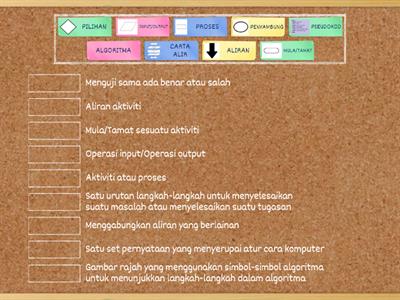
MENGENAL ALGORITMA, PSEUDOKOD DAN CARTA ALIR
โดย
Lokalnamkin
เครื่องบิน
4
UNIT 2: ALGORITMA, PSEUDOKOD DAN CARTA ALIR
โดย
Norhalizabasiro
จับคู่
6
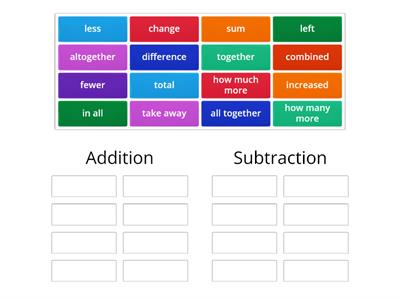
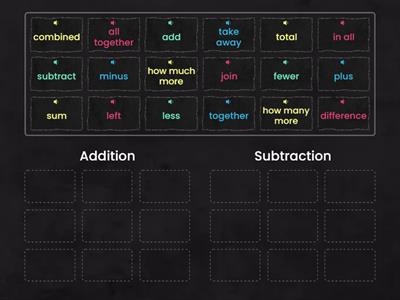
Word Problems keywords
โดย
Angelinacave
การเรียงลำดับกลุ่ม
30
Programming Keywords
โดย
Staylor107
จับคู่
6
Word Problem Keywords
โดย
Rcrull
การเรียงลำดับกลุ่ม
234
สลับแม่แบบ
แสดงทั้งหมด
เปิดผลลัพธ์
คัดลอกลิงค์
คิวอาร์โค้ด
ลบ
คืนค่าการบันทึกอัตโนมัติ:
ใช่ไหม