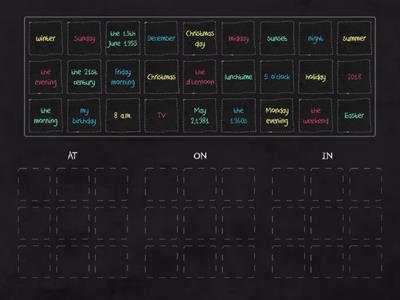
So we'll see you on Friday. / So we'll see you Friday., Both are possible. The second one is more common for American English., Are you going anywhere on Christmas? / Are you going anywhere at Christmas?, At Christmas - is correct.You can also say ‘on Christmas Day’., I’ll talk to you later. / I’ll talk with you later., I’ll talk to you later - is correct., After attending the meeting, I went to meet Paul. / After, I went to meet Paul., After attending the meeting, I went to meet Paul - is correct. After must be followed by a noun, pronoun or gerund., We’ll have a stand-up meeting in the morning. / We’ll have a stand-up meeting in Monday morning., We’ll have a stand-up meeting in the morning - is correct. You can say ‘on Monday morning’., Did you see the news on TV last night? / Did you see the news on TV the last night?, Did you see the news on TV last night? - is correct., The presentation lasted an hour and a half. / The presentation lasted during an hour and a half., The presentation lasted an hour and a half - is correct., We're going to Australia in August 11th. / We're going to Australia in August., We're going to Australia in August - is correct. We use preposition ‘on’ with dates., What time is the meeting? - At a quarter past nine. / What time is the meeting? - At a quarter after nine., Both are possible. ‘Past’ is mostly British, ‘after’ is mostly American., When did he turn up? - At 11 a.m. o'clock. / When did he turn up? - At 11 o'clock., When did he turn up? - At 11 o'clock - is correct. You can use either ‘a.m./ p.m.’ or ‘o’clock’.
0%
TASK 7a
แชร์
แชร์
โดย
Yappiteachers
แก้ไขเนื้อหา
บันทึก
ถูกใจ
สั่งพิมพ์
ฝัง
เพิ่มเติม
กำหนด
ลีดเดอร์บอร์ด
แสดงเพิ่มขึ้น
แสดงน้อยลง
ลีดเดอร์บอร์ดนี้ตอนนี้เป็นส่วนตัว คลิก
แชร์
เพื่อทำให้เป็นสาธารณะ
ลีดเดอร์บอร์ดนี้ถูกปิดใช้งานโดยเจ้าของทรัพยากร
ลีดเดอร์บอร์ดนี้ถูกปิดใช้งานเนื่องจากตัวเลือกของคุณแตกต่างสำหรับเจ้าของทรัพยากร
แปลงกลับตัวเลือก
แฟลชการ์ด
เป็นแม่แบบแบบเปิดที่ไม่ได้สร้างคะแนนสำหรับลีดเดอร์บอร์ด
ต้องลงชื่อเข้าใช้
สไตล์ภาพ
แบบ อักษร
ต้องสมัครสมาชิก
ตัวเลือก
แบบนี้อีก
Prepositions of time Speaking
โดย
Kseniyacoach
ล้อสุ่ม
53
Prepositions of time - Quiz
โดย
Pixiepickpocket
แบบทดสอบ
17
Prepositions of Time Practice
โดย
Yanapershina
การเรียงลำดับกลุ่ม
7
TELLING THE TIME (o'clock and half past ...)
โดย
Ikatarina33
แบบทดสอบ
53
Prepositions of Time activity
โดย
Adulted
แบบทดสอบ
8
English File advanced time expressions
โดย
Aleksandra223
เติมประโยคให้สมบูรณ์
6
Days of the week+ Present Simple (HE+Vs)
โดย
Tetianashchadylo
เติมประโยคให้สมบูรณ์
6
present simple with day and time
โดย
Amalalsalmi1979
ทำให้ไม่สับสนปนเป
7
สลับแม่แบบ
แสดงทั้งหมด
เปิดผลลัพธ์
คัดลอกลิงค์
คิวอาร์โค้ด
ลบ
คืนค่าการบันทึกอัตโนมัติ:
ใช่ไหม