What is Atomic Size?, Atomic size refers to the atomic radius, which is the distance between the centre of the nucleus and the outermost shell of an isolated atom.Unit: It is measured in picometres ({pm}): 1 { pm} = 10-12 m;Example: The atomic radius of Hydrogen is 37 { pm}., Give reasons: Atomic radius decreases as we move from left to right across a period., Scientific Reason: ✮As we move across a period, electrons are added to the same valence shell (the number of shells remains constant).✭As we move across a period, electrons are added to the same valence shell (the number of shells remains constant).✭At the same time, the nuclear charge (number of protons in the nucleus) increases by one unit at each step.This increased positive charge exerts a stronger electrostatic pull on the electrons, drawing them closer to the nucleus and shrinking the atomic radius., Atomic radius increases as we move down a group., Moving down a group, a new electron shell is added at each successive step.✮This increases the physical distance between the outermost electrons and the nucleus.✭This increases the physical distance between the outermost electrons and the nucleus.✭Even though nuclear charge increases, the addition of extra inner electron shells shields the outer electrons, overriding the nuclear pull and causing the overall atomic size to increase., Why does atomic radius decrease as we move from left to right across a period?, Because electrons are added to the same valence shell while the nuclear charge increases. This stronger positive nuclear charge pulls the electrons closer to the nucleus, reducing atomic size., Arrange the following elements in decreasing order of their atomic size: {Na (11), Cl (17), Mg (12), P (15)}., All four elements belong to Period 3. Since atomic size decreases across a period from left to right:{Na} > {Mg} > {P} > {Cl} ✭Sodium ({Na}) is the largest, and Chlorine ({Cl}) is the smallest., Between Lithium ({Li}, Z=3) and Potassium ({K}, Z=19):✭Which atom has a larger atomic radius?✭Give a scientific reason for your answer.✭What is the unit used to express atomic radius?, ✮Potassium ({K}) has a larger atomic radius.✭Both belong to Group 1. Moving down from Lithium (2 shells: K, L) to Potassium (4shells: K, L, M, N), extra shells are added, increasing the distance between the nucleus and the outermost electrons.✭It is expressed in picometres ({pm}).
0%
Atomic Size
Bendrinti
Bendrinti
prie
Jayalaxmivpoojary
Redaguoti turinį
Išsaugoti
Patinka
Spausdinti
Įterpti
Daugiau
Užduotis
Lyderių lentelė
Rodyti daugiau
Rodyti mažiau
Ši lyderių lentelė šiuo metu yra privati. Spustelėkite
Bendrinti
, kad ji būtų vieša.
Ši lyderių lentelė buvo išjungta išteklių savininko.
Ši lyderių lentelė yra išjungta, nes jūsų parinktys skiriasi nuo nustatytų išteklių savininko.
Grąžinti parinktis
"Flash" kortelės
yra neterminuotas šablonas. Jis negeneruoja rezultatų lyedrių lentelei.
Reikia prisijungti
Vizualinis stilius
Šriftai
Būtina prenumerata
Parinktys
Labiau taip.
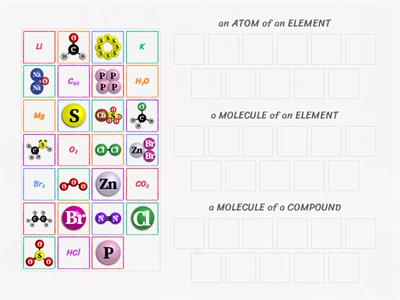
Periodic Table Group Sort
prie Anonimas
Priskyrimas grupėms
42
Atoms, Elements and Molecules
prie
Nicolakeymer
Rask tinkamą
13
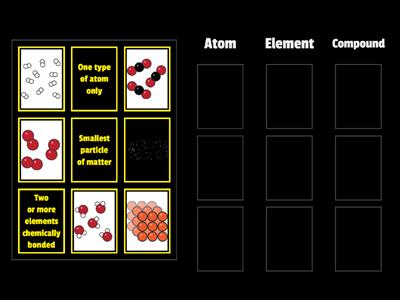
WW: SORT Atom/Molecule AND Element/Compound (Sort)
prie
Scayer
Priskyrimas grupėms
37
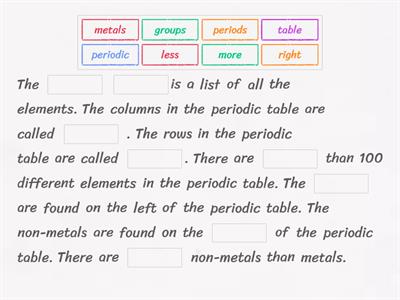
Modern Periodic Table Arangement
prie
Anewton1
Užbaikite sakinį
19
Atoms, elements & compounds
prie
Lstobo300
Priskyrimas grupėms
15
Subatomic Particles and Atomic Number
prie
Eboehm
Rask tinkamą
6
Atoms, elements and compounds match-up
prie
Swright
Rask tinkamą
10
Atom & Periodic table review
prie
Difabiocms
Viktorina
14
Pakeisti šabloną
Rodyti viską
Atviri rezultatai
Kopijuoti nuorodą
QR kodas
Naikinti
Atkurti automatiškai įrašytą:
?