Algorithm, A clear set of steps to solve a problem., Instruction, A single command (one step) in an algorithm., Program, A sequence of instructions that runs to complete a task., Automation, Getting a process done by a program instead of a person doing every step., Decomposition, Breaking a big problem into smaller manageable parts., Pattern, A repeated structure you can spot and reuse in a solution., Loop, Repeating the same instructions., Conditional, A decision point: do something only if a condition is true., If / else, “If this is true, do this; otherwise do that.”, Branching, The program taking different paths depending on conditions., Variable, A named value that can change., Counter, A variable used to keep track of a number (like how many times something happens)., Input, Data that goes into a program., Output, The result a program produces., Bug, A mistake that causes a program to behave incorrectly., Debugging, Finding and fixing bugs., Flowchart, A diagram that shows the steps of an algorithm using standard symbols., Pseudocode, A “halfway” language: structured like code, but written in plain English., Trace table, A table used to track how variables change step-by-step as an algorithm runs.
0%
Algorithms - keywords
Share
Share
by
Entrepreneurquizzes
Secondary
KS3
Computing
Edit Content
Save
Like
Print
Embed
More
Assignments
Leaderboard
Show more
Show less
This leaderboard is currently private. Click
Share
to make it public.
This leaderboard has been disabled by the resource owner.
This leaderboard is disabled as your options are different to the resource owner.
Revert Options
Anagram
is an open-ended template. It does not generate scores for a leaderboard.
Log in required
Visual style
Fonts
Subscription required
Options
More like this
Algebra terminology keywords
by
Msearson
Wordsearch
2
Programming Terminology Task
by
Catwilkes
Match up
3
Algorithms
by
Zehranaqvi
Quiz
9
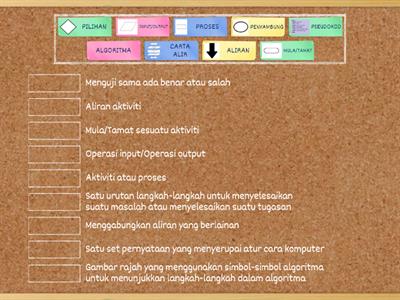
MENGENAL ALGORITMA, PSEUDOKOD DAN CARTA ALIR
by
Lokalnamkin
Airplane
4
UNIT 2: ALGORITMA, PSEUDOKOD DAN CARTA ALIR
by
Norhalizabasiro
Match up
6
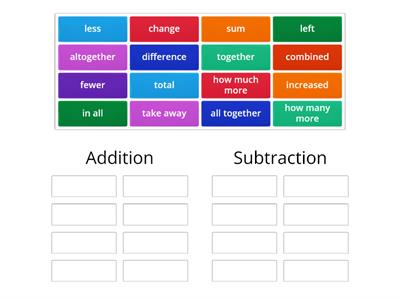
Word Problems keywords
by
Angelinacave
Group sort
30
Programming Keywords
by
Staylor107
Match up
6
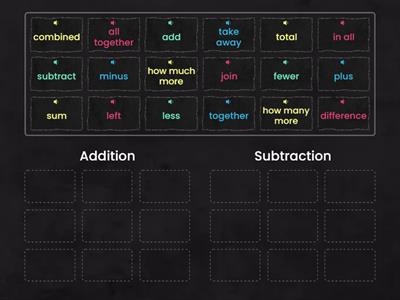
Word Problem Keywords
by
Rcrull
Group sort
234
Switch template
Show all
Open results
Copy link
QR code
Delete
Continue editing:
?